

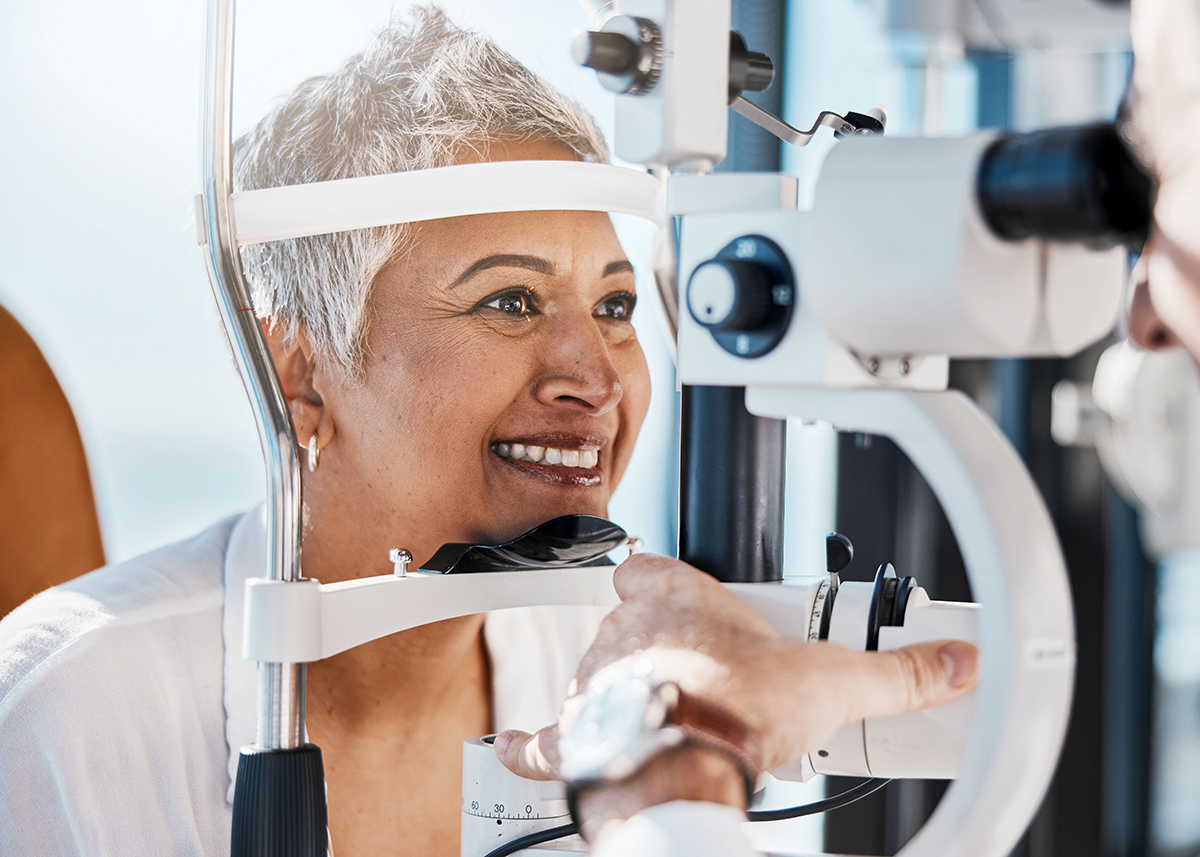
At Eye Consultants of North Virginia in Springfield, our expert ophthalmologists use the latest technology to perform advanced cataract surgery in our state-of-the-art facility. We prioritize patient comfort while maintaining the highest standards of care to ensure you are supported at every step of your journey to clearer vision.
While cataracts often don't present with obvious symptoms at first, they can significantly affect your quality of life as they continue to impair your vision. If you're finding it difficult to do normal activities like driving at night, reading, and navigating around your home, it may be time to consider cataract surgery.
Restoring your vision can help you regain your independence and participate in all your favorite activities with confidence again.

Dr. Ailani is a board-certified fellowship-trained ophthalmologist and cataract surgery specialist who has personally performed over 15,000 cataract surgeries. He is a highly skilled eye doctor serving Springfield and Woodbridge, and his extensive training in cornea and anterior segment surgery, combined with his expertise in both standard and advanced technology intraocular lenses, ensures that if you choose to have cataract surgery, you are in expert hands.
Our entire team at the Eye Consultants of Northern Virginia has vast knowledge and decades of combined personal experience with the latest surgical techniques and intraocular lens (IOL) options.
Cataracts often occur as a natural part of the aging process, when proteins within the natural lens of the eye slowly break down and clump together in patches, causing blurry, clouded vision. They can also be present at birth or develop as a result of an injury to the eye.
In most cases, they develop slowly as you get older, leading to gradually worsening vision and other symptoms like halos and glares, yellowed or dulled vision, poor night vision, and light sensitivity. At first, you may only need to make small lifestyle adjustments like getting a higher prescription or adding more light to your environment.
However, once cataracts begin to interfere with daily activities like working, driving, and socializing, it's time to consider cataract surgery. As one of the most common procedures performed worldwide, cataract surgery has helped millions restore their vision and regain independence.

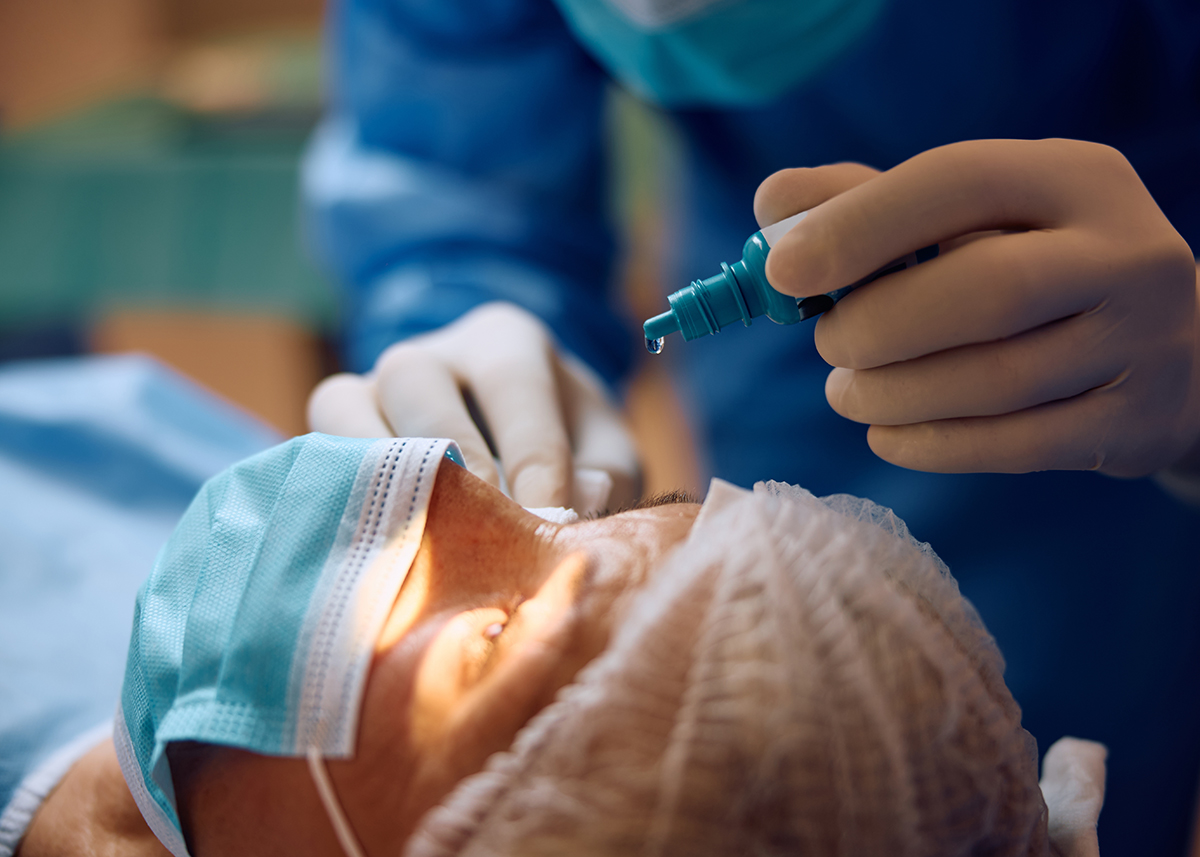
To begin your cataract surgery procedure, your eye doctor will administer numbing eye drops to ensure you don't feel any pain. Then, they will make a tiny incision in the cornea of your eye to access the lens capsule that holds your natural lens.
Eye Consultants of Northern Virginia employs advanced femtosecond laser technology to break up the cataract-affected natural lens of your eye, then removes the fragments and puts your chosen intraocular lens (IOL) in its place. Your eye doctor will place a protective patch over your eye and send you home with anti-inflammatory and antibiotic eye drops.
At Eye Consultants of Northern Virginia, we believe every qualified patient deserves the opportunity to reclaim their visual freedom and experience life without the hassles of glasses or contact lenses following cataract surgery. Through our comprehensive evaluation process, cutting-edge intraocular lens options, and state-of-the-art surgical expertise, we stand as the premier destination for cataract treatment in Springfield.
Whether you've depended on visual aids for decades or are just beginning to experience the effects of cataracts, we possess the advanced capabilities to not only eliminate the cloudy lens obstructing your sight, but also dramatically reduce or completely eliminate your reliance on glasses and contacts. Some patients envision exploring the beautiful landscapes of Northern Virginia with crystal-clear vision, while others look forward to enjoying their favorite hobbies or reading without the inconvenience of cumbersome glasses.
No matter what activities inspire you most, our team is dedicated to helping you realize your vision of an unrestricted lifestyle, free from the constraints of glasses and contacts!

At first, cataracts typically don't present with symptoms, but as they continue to develop, you may notice:
Following cataract surgery, you should prioritize rest. Your eye doctor will ask you to follow restrictions, including:
At your post-operative follow-up appointments, your cataract surgeon will examine your eye to assess how it is healing. Based on their observations, they will let you know when you can return to normal activities.
Although every patient's recovery will be unique, most patients enjoy improved vision within 1-3 days. Peak visual clarity will take several weeks to months to reach.
Once your cataract-affected natural lens has been removed and replaced with an artificial IOL, cataracts can no longer form. However, a condition called posterior capsular opacification, also known as secondary cataracts, can occur in some patients as a side effect of cataract surgery.
This is when cloudy patches form on the lens capsule following your procedure. Luckily, your eye doctor can fix this issue with a quick procedure called posterior capsulotomy, restoring your vision.
Monofocal lenses are also often referred to as standard lenses. Most of the time, standard monofocals lenses are covered under insurance.
Toric lenses are IOLs that are specifically designed to correct astigmatism. Those with astigmatism have a cornea that is less round than a normal cornea.
Multifocal IOLs are premium lenses that can correct your vision at multiple distances, significantly reducing or eliminating your reliance on visual aids after cataract surgery. There are a variety of multifocal IOLs available, including the Alcon PanOptix IOL.
An extended depth of focus lens, also known as an EDOF lens, creates a single, elongated focal point instead of multiple distinct ones, similar to a multifocal lens. If you choose an extended depth of focus lens, such as the Alcon Acrysof IQ Vivity lens, you can expect to experience excellent distance and intermediate vision, as well as improved near vision.
"My visit to Eye Consultants of Northern Virginia was a great experience. They were recommended to me when I had cataracts. Dr. Ailani did my cataract surgery, and he was wonderful!! I wore glasses all my life, and I opted to get multifocal lenses instead of single-focus lenses. The results are amazing!!! I only need glasses for reading very small print. My night vision is the best it has ever been."

"Cataract surgery was a total success! Vision is sharp. Everything is bright. Very happy with the results."
"I recently had cataract surgery on both of my eyes. My experience with every single person working at ECNV, from the time I made my first appointment, to check in, to my eye exams, my surgery, and follow-up, has been top-notch. Dr. Ailani and his support team covered every detail, answered any questions, and truly put me at ease. I highly recommend ECNV and Dr. Ailani."



8136 Old Keene Mill Rd, Ste. B-300
Springfield, VA 22152
(In the Cary Building)
Tel: (703) 451-6111
Fax: (703) 451-6247
Monday - Thursday: (8:30am - 5:00pm)
Friday: (8:30 - 4:00pm)
4565 Daisy Reid Ave Ste 310
Woodbridge, VA 22192
Tel: (703) 451-6111
Fax: (703) 451-6247
Monday - Thursday: (8:30am - 5:00pm)
Friday: (8:30 - 4:00pm)

